









MWC Shanghai 2026: XINYISEMI Deepens Edge-Side AI Computing Power and NTN Global Connectivity Strategy
From June 24 to 26, the 2026 Mobile World Congress Shanghai (MWC26 Shanghai) took place as scheduled in Shanghai. During the event, XINYISEMI presented a full range of its latest advancements in edge-side AI, NTN, GNSS, OpenCPU architecture, and more, and officially launched its second-generation Cat.1 bis XY4101 series chipset.
Edge-Side AI: From Image Recognition to Voice Interaction, Continuously Strengthening the Hardware Foundation
To adapt to the intelligent evolution of IoT applications, XINYISEMI has enhanced its edge-side computing capabilities in Cat.1 chip design, including boosting CPU clock speeds, expanding Cache, and adding floating-point unit (FPU) support. This enables lightweight models for voice, image, and other applications to run efficiently on-device without relying entirely on the cloud. Building on the success of the XY4100 series in supporting edge-side scenarios such as AI water meters and AI toys, the newly released XY4101 chip series will provide a more powerful computing foundation for edge-side AI tasks.
In image-based applications, addressing the pain points of traditional mechanical meter retrofitting, XINYISEMI has launched an AI camera-based water meter solution. Leveraging edge-side computing power, it achieves high-precision recognition combining "number wheels + pointers," with image recognition accuracy exceeding 99.5%. Through algorithm optimization, single-recognition power consumption is reduced to below 25 µAh, meeting the long-life requirements of water meters.
In voice-based applications, XINYISEMI's Cat.1 series chip platforms have been maturely deployed in AI interactive toys. Based on XINYISEMI's self-developed RISC-V architecture chips and integrated with cloud-based large models, terminals are able to deliver natural dialogue and emotional interaction. In addition, XINYISEMI is developing a PoC (Push-to-Talk over Cellular) intercom solution, targeting noisy environments such as security and construction sites, with features including keyword wake-up, voice noise reduction, and background sound filtering. The company also plans to deeply integrate communication capabilities with AI technologies to address issues such as inefficient communication and delayed response in frontline operations.
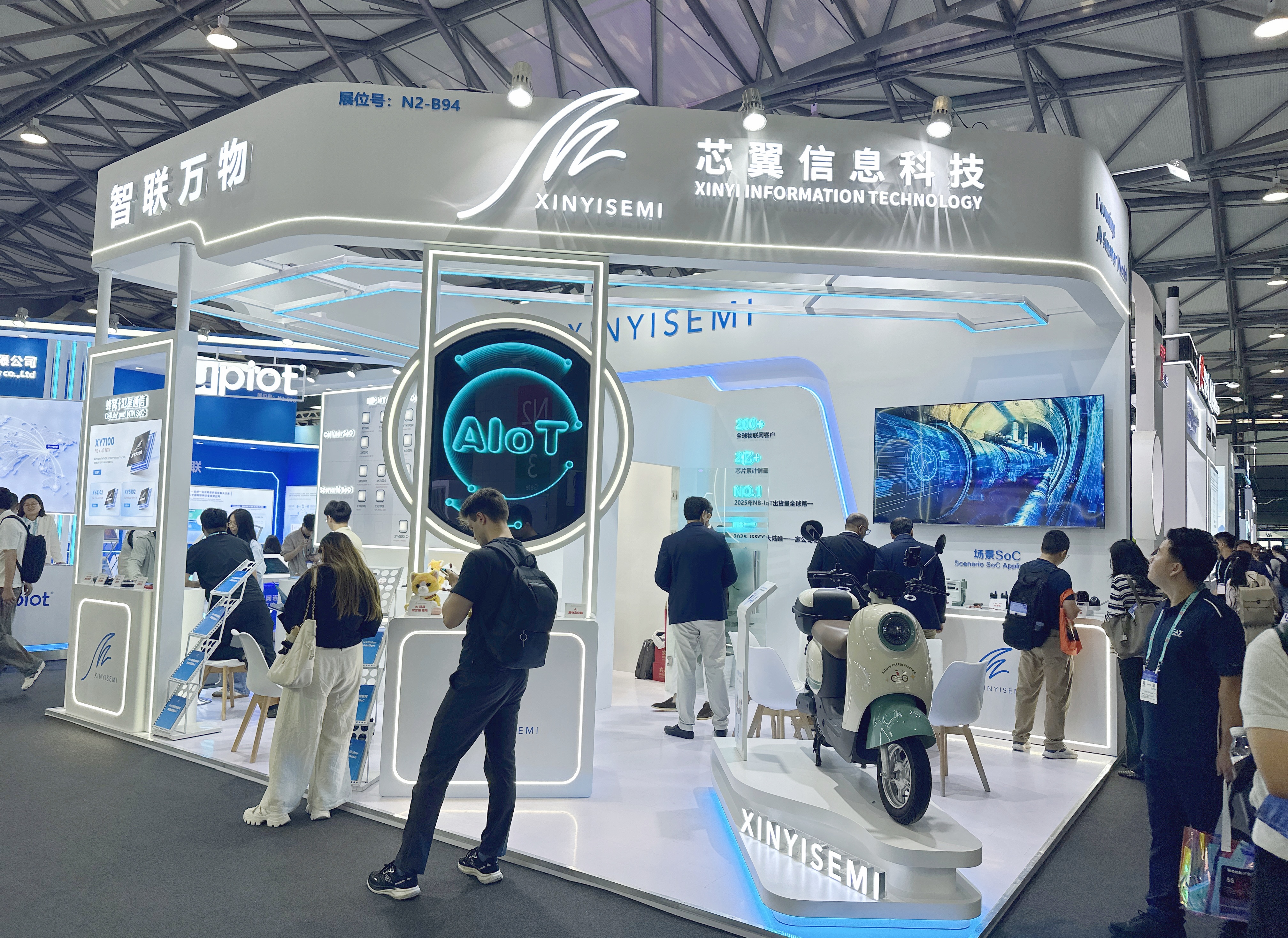
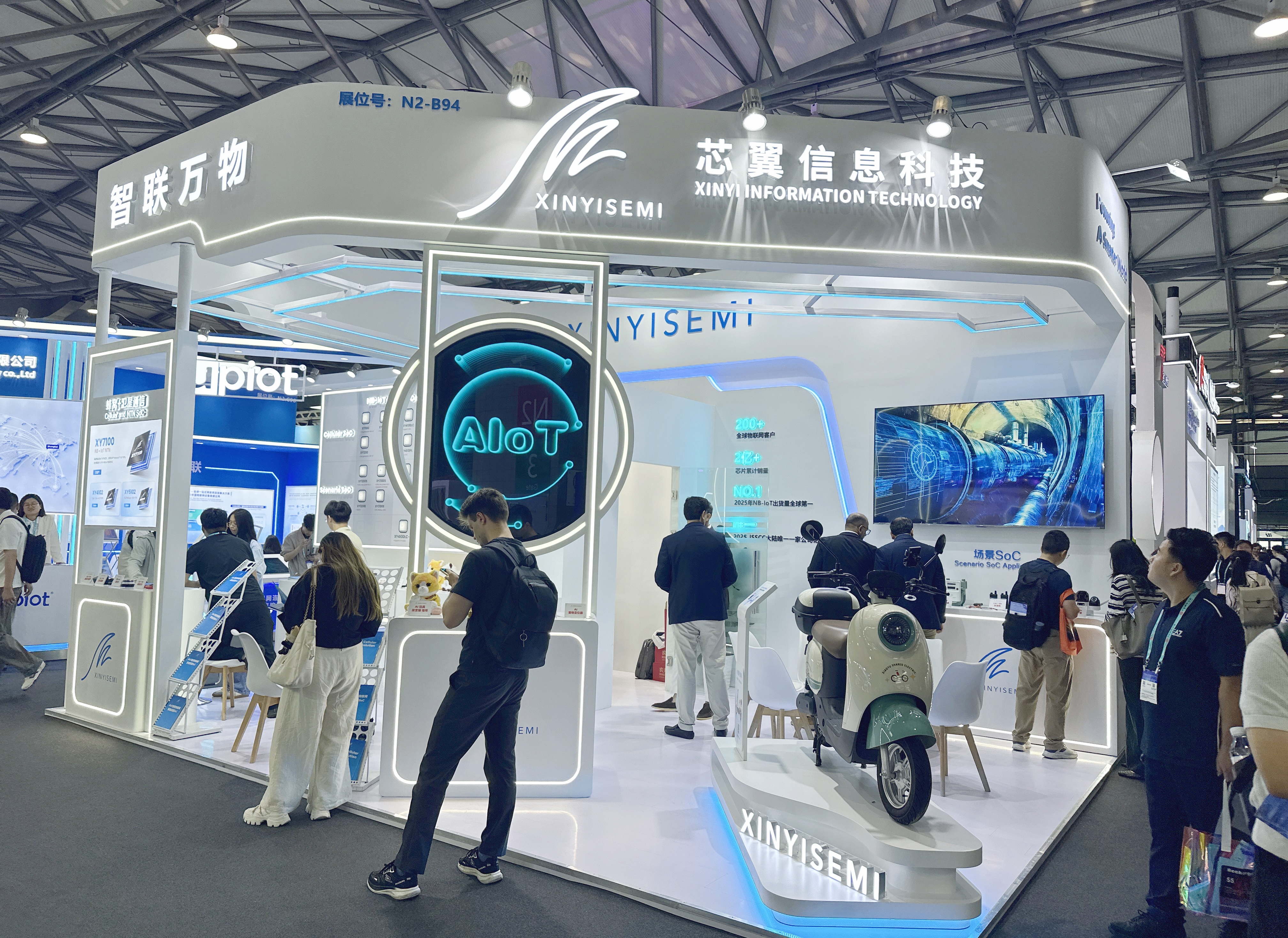
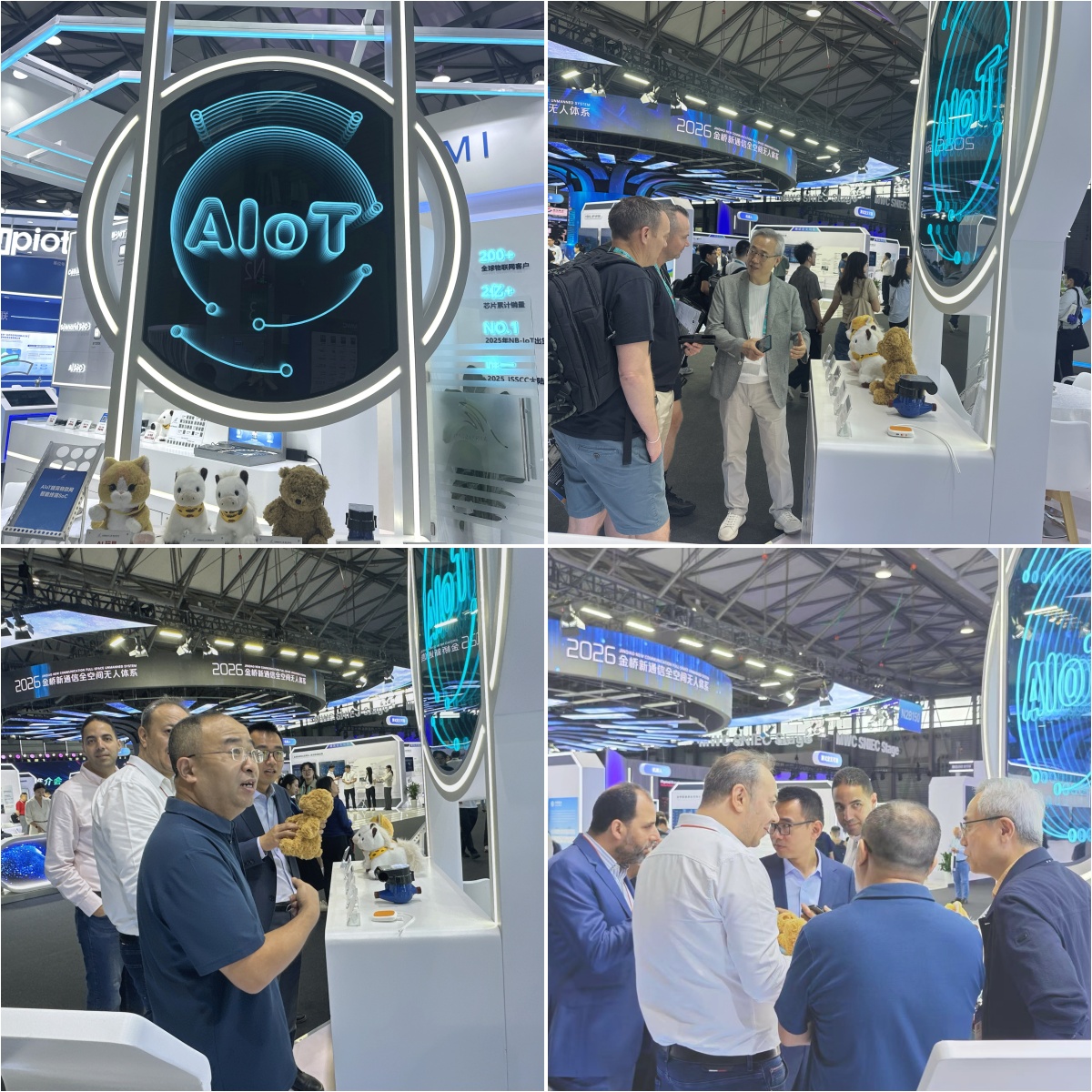
At the exhibition site, products powered by XINYISEMI's solutions—including AI camera-based water meters, AI interactive toys, and AI pet trackers—were all on display, vividly demonstrating how edge-side intelligence is reshaping terminal experiences.
NTN Layout: Dual-Mode Communication Standard on All Cellular Chips
With the rise of application scenarios such as the low-altitude economy, cross-border logistics, and emergency communications, the issue of coverage gaps in terrestrial cellular networks—particularly in remote mountainous areas, oceans, and deserts—has become increasingly prominent. Relying solely on ground-based base stations can no longer meet the demand for seamless global connectivity, making NTN a critical means of filling these gaps.
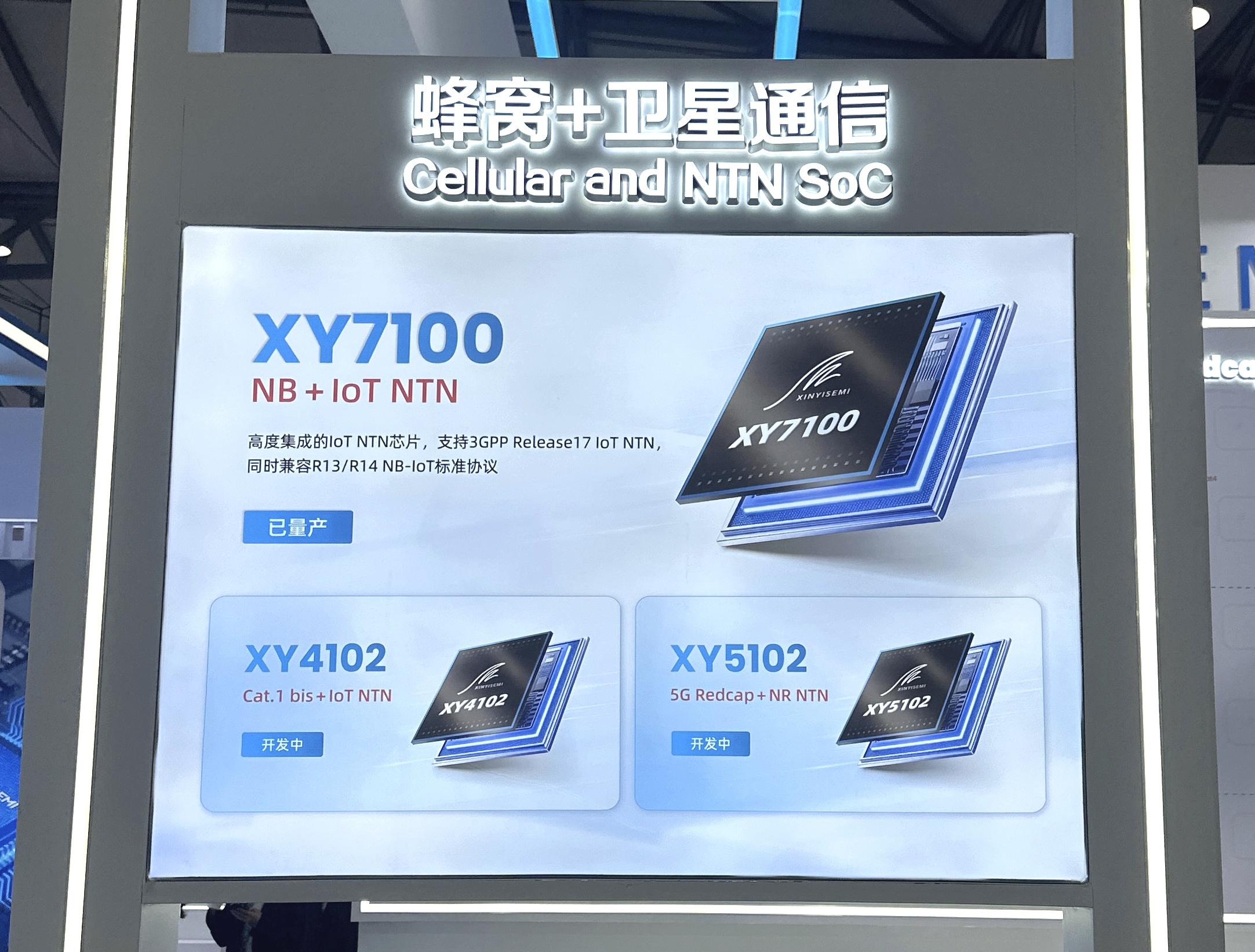
To address this, XINYISEMI has already initiated its NTN strategy, planning to make NTN capabilities standard across its entire cellular chip lineup: from NB-IoT and Cat.1 to 5G RedCap, all will support dual-mode switching between cellular and satellite networks. In the future, IoT terminals deployed in remote areas will be able to automatically switch to satellite links when terrestrial networks are unavailable, ensuring uninterrupted service.
In terms of ecosystem collaboration, XINYISEMI is accelerating the integration with global satellite networks. Internationally, the company is conducting certification and interoperability testing with major satellite service providers such as Skylo, Sateliot, and Iridium. Domestically, it maintains close cooperation with China SatNet, simultaneously advancing interoperability testing and integration for both narrowband and broadband networks.
Notably, in 2025, XINYISEMI took the lead in undertaking the national major science and technology project "Development of 5G-A NTN Direct-Connected Satellite-Borne Baseband Broadband Terminals," sponsored by the Ministry of Industry and Information Technology. This milestone underscores the company's technical strength and recognized expertise in the NTN domain.
New Cat.1 Product XY4101: Comprehensive Upgrade, Open Solution Breaks Through Complex Scenario Bottlenecks
At this exhibition, XINYISEMI released the XY4101 series, which is the second-generation product of its Cat.1 product line. Compared with the previous generation, it delivers significant improvements in performance, power consumption, and sensitivity.
The XY4101 series includes two variants. The XY4101 PL features a QFN package with 2MB ROM + 2MB RAM, targeting the domestic Chinese market. The XY4101 PC, on the other hand, is equipped with 4MB ROM + 4MB RAM and supports the OpenCPU solution. With enhanced CPU performance and floating-point computing capabilities, it is tailored for full-featured scenarios both domestically and internationally.
A distinctive advantage of the XY4101 PC variant is its support for the 450MHz low-frequency band (Band 31/72), enabling compatibility with emerging network deployments in overseas markets. Currently, very few manufacturers in the industry support this frequency band, giving XINYISEMI a differentiated competitive edge in specific overseas markets.
Beyond the chip's hardware specifications, XINYISEMI is leveraging the OpenCPU architecture to translate the chip's integration advantages into tangible competitive strengths for end-terminal products, helping customers achieve ultimate cost reduction and energy efficiency improvements. The two flagship application demonstrations highlighted at this exhibition are a vivid reflection of this capability:
In the NB-IoT meter sector, XINYISEMI 's OpenCPU solution based on the XY1200 series SoC has become an industry benchmark for cost reduction and efficiency improvement. This solution eliminates the need for a traditional external MCU, achieves full domestic production with guaranteed supply, and reduces operating power consumption by more than 50% compared with the external MCUs currently used by meter manufacturers.
This capability has also been extended to the more complex smart two-wheeler vehicle scenario. As one of the most complex OpenCPU application scenarios in the industry, two-wheeler vehicles must simultaneously handle multiple concurrent tasks, including real-time positioning, motor control, battery management, and high-frequency data reporting. Leveraging its comprehensive Open SDK and field-verified low-power performance, XINYISEMI's solution helps customers significantly reduce costs while ensuring system stability. It is reported that this solution has already achieved mass production at scale.
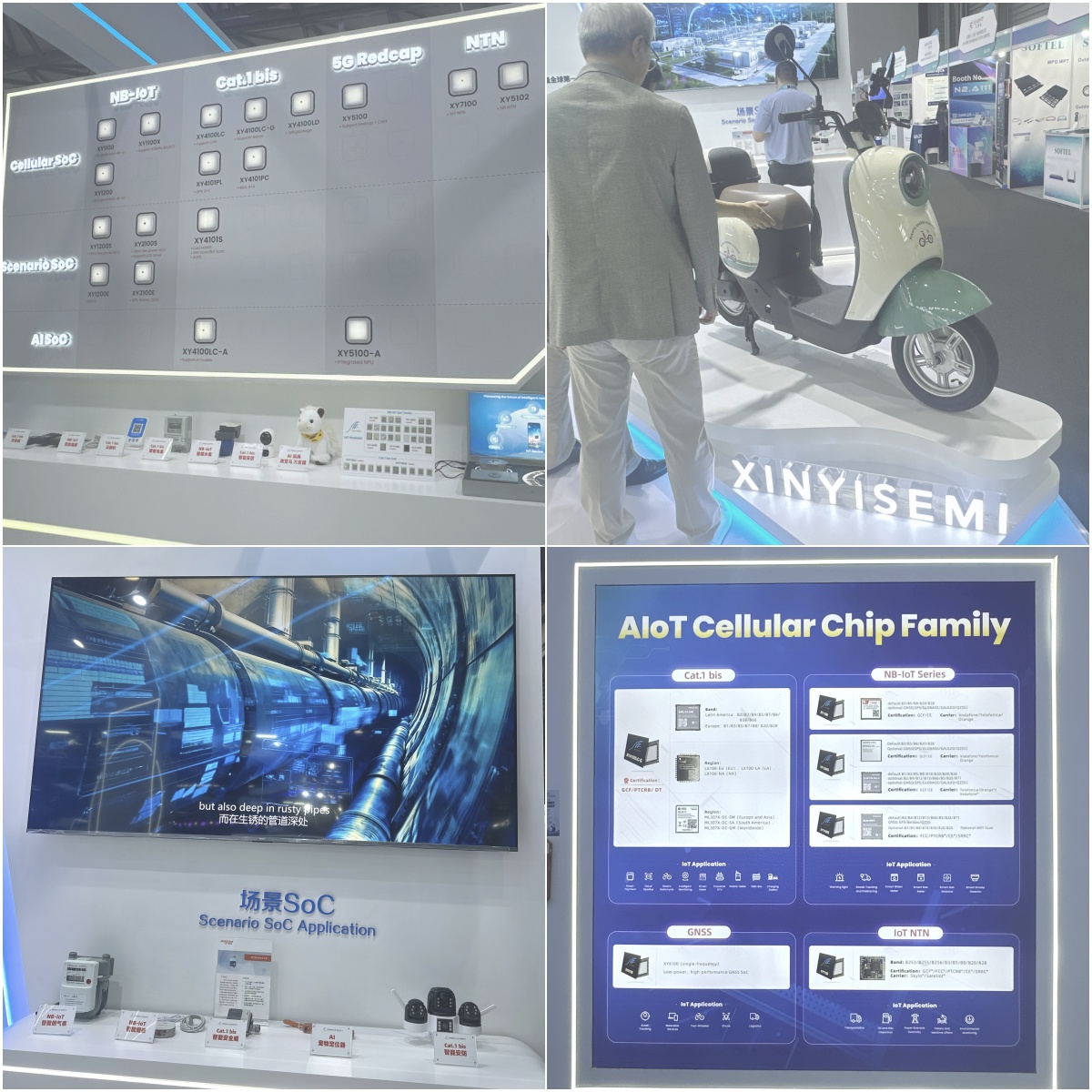
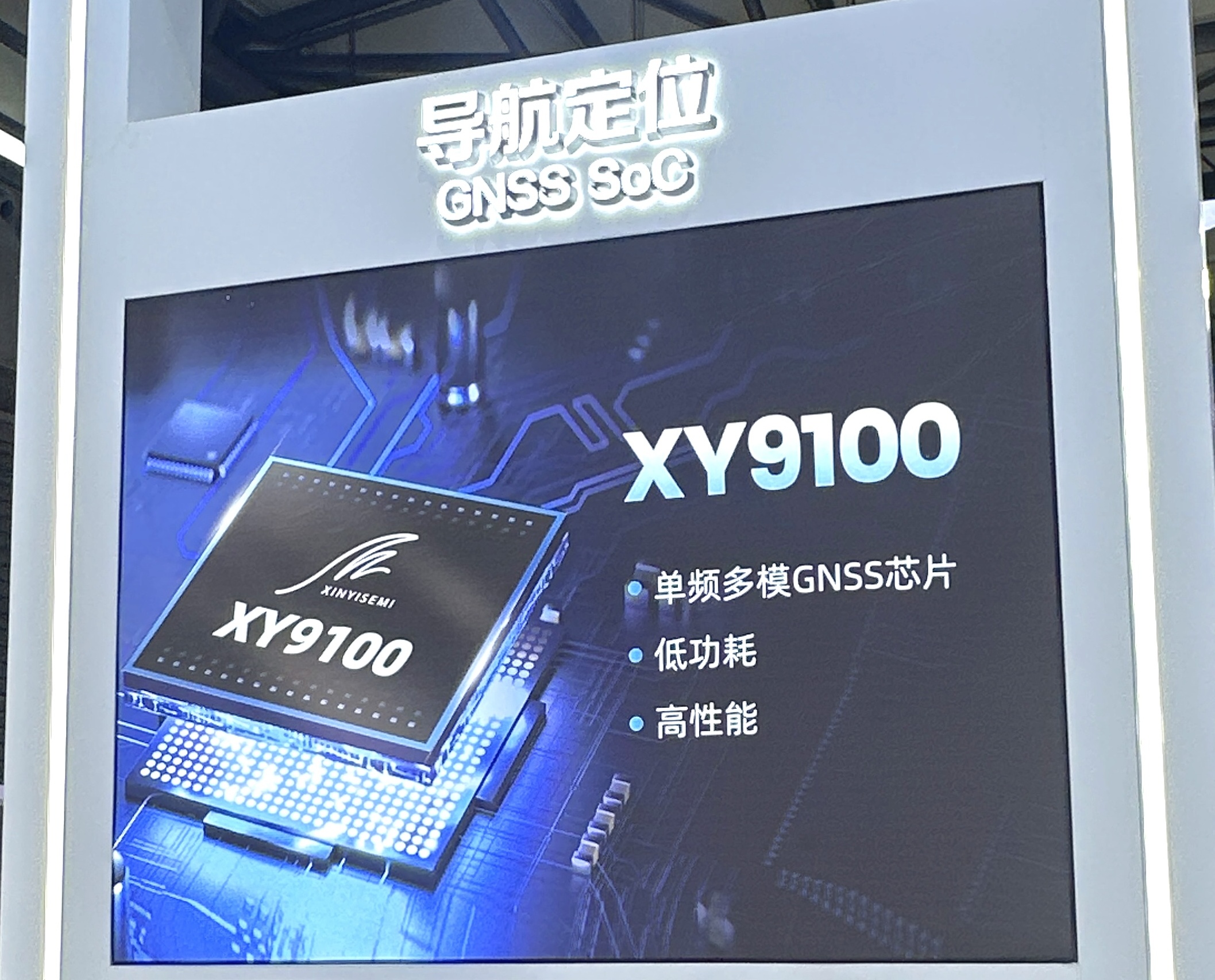
As an extension of the product line, the GNSS positioning chip XY9100 also made its debut at this exhibition. The chip supports multi-system and multi-frequency operation across GPS, BeiDou, Galileo, and more, with a cold start sensitivity of -148 dBm and positioning accuracy reaching 1.5m CEP. It can be widely applied in two-wheeler vehicles, logistics tracking, and portable devices, providing high-precision positioning support for IoT terminals.
XINYISEMI's full-spectrum presentation at MWC26 Shanghai affirms its robust evolution from a cellular chip supplier to a frontrunner in edge-side AI and ubiquitous connectivity. Looking ahead, as computing capabilities further permeate the edge and space-air-ground integrated networks mature, the company—backed by its solid product lineup—will continue to power the intelligent upgrade of diverse industries with an enduring flow of "core" driving force.
